


When buying a home in Edison, NJ, a finished basement, spacious lower level, or attractive backyard can make a property stand out. But before making an offer, buyers should look beyond appearances and understand how the property handles heavy rain, groundwater, and drainage.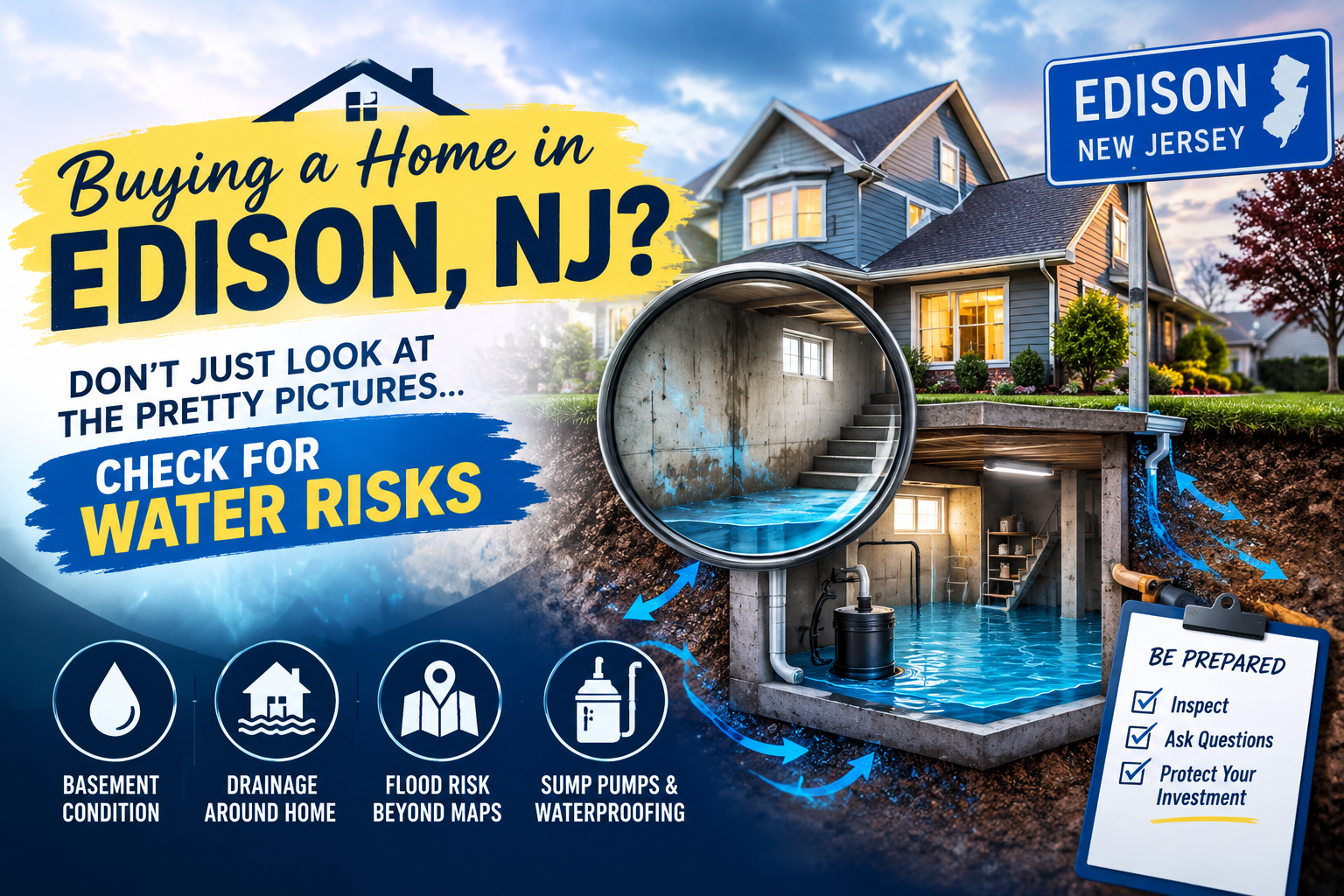
Water-related problems can lead to damaged flooring, mold growth, foundation concerns, and unexpected repair expenses. Even a home that looks dry during a showing may have experienced water intrusion in the past.
For anyone exploring Middlesex County, NJ real estate in 2026, understanding basement condition and flood risk is an important part of evaluating a property's long-term costs. Here's what to check before committing to a home in Edison.
1. Look for Signs of Previous Basement Water Problems
A basement does not need standing water to show signs of moisture. During a showing, look carefully at walls, floors, corners, windows, and areas around plumbing.
Potential warning signs include:
-
Musty or persistent damp odors.
-
Water stains or discoloration on walls and ceilings.
-
White, chalky deposits on masonry, sometimes called efflorescence.
-
Peeling paint, bubbling finishes, or damaged baseboards.
-
Rust on metal fixtures or corrosion around pipes.
-
Visible mold-like growth or deteriorating materials.
-
Recently replaced flooring or fresh paint in isolated areas that may warrant further questions.
These signs do not automatically mean a home has a major defect. However, they are reasons to investigate further rather than assume the basement is problem-free.
Ask the seller about known water intrusion, previous repairs, sump pump installations, and any history of flooding or water pooling after storms. Review available invoices, warranties, and contractor reports.
A qualified home inspector can help identify visible concerns and recommend additional evaluation when necessary.
2. Check How Rainwater Moves Around the Property
Drainage around the house can affect whether water collects near the foundation or moves away from the building.
During your visit, examine the ground immediately surrounding the home. Look for areas where the soil slopes toward the foundation, low spots where water may collect, or signs that downspouts discharge water close to the house.
Also pay attention to:
-
Gutters that appear clogged, loose, or damaged.
-
Downspouts that release water beside the foundation.
-
Depressions in the yard that may collect runoff.
-
Soil erosion or exposed areas near the foundation.
-
Retaining walls showing movement or deterioration.
-
Driveways or patios that slope toward basement entrances.
A property may have a drainage issue even if the basement currently looks dry. If something appears concerning, ask a qualified contractor to assess the grading and drainage system.
Do not assume that a simple landscaping change will solve every problem. The appropriate solution depends on the property's topography, soil conditions, existing drainage infrastructure, and the source of the water.
3. Understand Edison Flood Risk Beyond the Flood-Zone Map
One of the most important steps is checking the property's flood-risk information before making a purchase decision.
The Federal Emergency Management Agency (FEMA) publishes flood maps that identify designated flood hazard areas. However, these maps do not capture every possible source of flooding, particularly localized drainage problems or water accumulation during intense rainfall.
The New Jersey Department of Environmental Protection explains that flooding can occur outside mapped flood zones and provides tools to help residents investigate potential risks.
Before buying a home, consider these steps:
-
Search the property's address using the NJDEP Flood Indicator Tool.
-
Review available FEMA flood-zone information and historical flooding indicators.
-
Ask the seller about known flooding, water pooling, and previous flood damage.
-
Ask your insurance professional whether flood coverage is advisable and what it may cost.
-
Investigate drainage concerns even if the property is outside a mapped flood hazard area.
Treat mapping tools as a starting point, not a guarantee that a home will or will not flood. Site-specific conditions and changes in rainfall patterns can affect actual risk.
4. Ask About Sump Pumps, Foundation Repairs, and Waterproofing
Some homes use sump pumps, drainage systems, or waterproofing measures to manage water around the foundation. These systems can be useful, but their presence does not automatically mean the basement is protected under every condition.
If the property has a sump pump, ask whether it has been serviced, whether there is a backup system, and whether the discharge location is appropriate. A backup power source may be worth discussing with a qualified professional because severe storms can interrupt electricity.
If the seller reports foundation repairs or basement waterproofing, request documentation where available. Ask who performed the work, what problem was addressed, and whether any warranty transfers to the new owner.
Look for visible foundation cracks, signs of movement, or recurring moisture. Not every crack indicates a structural problem, but significant, widening, or displaced cracks deserve evaluation by an appropriate specialist.
New Jersey emergency-management guidance also recommends considering sump pumps with backup power and taking steps to reduce water damage to basement equipment. <Cite refs={["turn550626search3"]} />
5. Find Out Whether Flood Insurance May Be Necessary
Homeowners insurance generally does not cover flood damage under a standard policy. Flood insurance may need to be purchased separately, and coverage terms vary by policy. <Cite refs={["turn550626search11"]} />
If you are considering a property in Edison, ask your insurance agent to explain:
-
Whether the lender will require flood insurance.
-
Whether separate flood coverage is available and advisable.
-
The estimated annual premium and deductible.
-
What the policy covers and excludes.
-
Whether basement contents and equipment have limited coverage.
-
How the property's flood-zone classification affects the insurance process.
Do this early enough to understand the potential expense before closing. The mortgage payment alone does not represent the full cost of owning a home.
For additional information, consult NJDEP's flood-risk guidance and discuss property-specific questions with an insurance professional.
6. Review the Seller's Flood Disclosures
New Jersey requires sellers of residential real estate to provide specific flood-risk information through the applicable property condition disclosure process before the buyer becomes obligated under the purchase contract.
The disclosures address matters including designated FEMA flood hazard areas and the seller's actual knowledge of the property's flood risks. <Cite refs={["turn550626search4","
Review the information carefully and ask questions if an answer is unclear or if it conflicts with what you observe during the inspection.
You can also ask about previous water intrusion, basement repairs, insurance claims, and known drainage issues. Have your real estate agent and attorney help you understand the available information and your options under the contract.
Remember that disclosure forms are only one source of information. They should be considered alongside inspections, records, insurance guidance, and independent flood-risk research.
7. Make the Home Inspection Work for You
A standard home inspection can identify visible moisture concerns and certain drainage or foundation warning signs, but it may not establish the full cause of a water problem or predict future flooding.
If the inspector identifies concerns, consider whether additional evaluation is appropriate. Depending on the findings, you may need advice from a foundation specialist, drainage contractor, structural engineer, or other qualified professional.
Before your inspection contingency or other contractual deadlines expire, discuss the results with your real estate agent and attorney. They can help you understand the contract's available options, which may include requesting repairs, seeking additional information, negotiating terms, or reconsidering the purchase where permitted.
Do not rely solely on a seller's verbal assurance that a basement has never had water problems. Ask questions, review documentation, and make decisions based on the evidence available.
8. Calculate the Potential Cost of Basement Improvements
A basement can provide useful storage or additional usable space, but moisture problems can turn an attractive feature into an expensive project.
Potential expenses may include repairing damaged finishes, improving exterior drainage, replacing a sump pump, addressing foundation issues, or remediating moisture-related damage. The cost depends on the source and severity of the problem.
Before making an offer, consider how any required repairs would affect your budget. If the basement is finished, verify that the work was completed appropriately and determine whether applicable permits or approvals were obtained.
Do not assume that a finished basement is automatically approved for every intended use. Confirm relevant requirements with the appropriate municipal authorities.
A home that fits your budget at the asking price may have a very different total cost once necessary repairs, insurance, and ongoing maintenance are considered.
Choose Your Edison Home With Confidence
A careful review of basement condition, exterior drainage, flood maps, insurance costs, and seller disclosures can help you make a more informed homebuying decision.
For buyers exploring Middlesex County, NJ homes for sale, the goal is not necessarily to avoid every property with a basement or any potential water concern. It is to understand the risks, investigate warning signs, and evaluate whether the home makes financial sense for your circumstances.
Yousuf Syed Syed, Broker Associate at eXp Realty, helps buyers evaluate property options, compare market information, and navigate the homebuying process. With 23 years of real estate experience, over 500 homes sold, and 96 Google five-star reviews, his approach emphasizes informed decisions and data-driven negotiation.
Contact Yousuf Syed Syed at eXp Realty for guidance as you explore homes in Edison and throughout Middlesex County.
Call 732-754-2541 | Visit homesbyyousuf.com to schedule your FREE 2026 Market Strategy Session.